At Calle Ocho in Little Havana, Cuban Americans voice optimism amid Cuba’s deepening energy crisis
A cultural festival becomes a forum for family ties and political expectations
Thousands of attendees filled 15 blocks of Southwest Eighth Street in Little Havana on Sunday, March 15, as the annual Calle Ocho Music Festival returned as the culminating marquee event of Carnaval Miami. Alongside music stages, food vendors and community activations, conversations repeatedly turned toward the island that anchors much of the neighborhood’s identity: Cuba.
For many Cuban Americans, Calle Ocho functions as both celebration and informal civic space. Between performances and street-level gatherings, residents described a mix of concern for relatives on the island and guarded hope that Cuba’s prolonged economic and infrastructure strain could eventually force meaningful change. The sentiments reflected a community shaped by successive waves of migration, where family remittances, phone calls and news from the island remain part of everyday life in Miami-Dade.
Hope and anxiety intensified by blackouts and public unrest
This year’s festival came as Cuba faces an acute energy emergency marked by repeated large-scale outages and fuel shortages that have disrupted transportation, schooling and basic services. In early March, widespread power failures affected large sections of the country, including Havana, underscoring the fragility of the electric grid and the broader pressures on the economy.
In recent days, public frustration inside Cuba has also been visible in demonstrations and clashes in several locations, including protests near local Communist Party offices and student actions linked to reduced university schedules during the power crisis. The evolving situation has heightened attention in South Florida, where many families maintain close links to the island and track day-to-day conditions for relatives.
Little Havana’s institutions and symbols frame the conversation
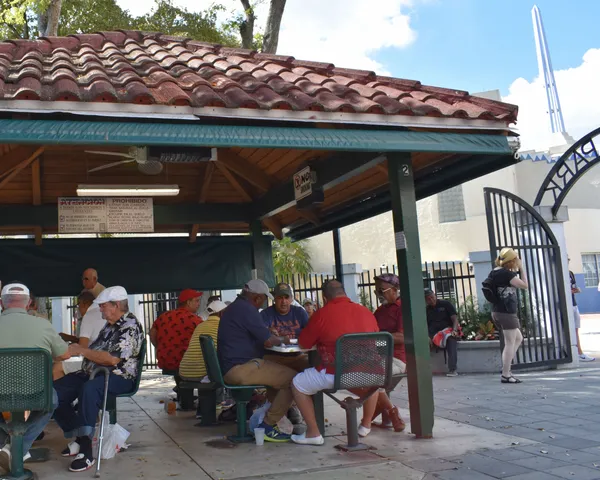
On Calle Ocho, community discussion drew on the neighborhood’s long-standing role as a center of Cuban exile life. Landmarks such as Máximo Gómez Park—widely known as Domino Park—remain gathering points for older residents, while restaurants and cultural venues along the corridor continue to serve as meeting places for civic groups, political organizing and intergenerational storytelling.
Calle Ocho has long operated as more than an entertainment corridor: it is where diaspora identity, cultural memory and political debate repeatedly intersect.
What attendees said they want next
Across interviews and on-the-street conversations, participants emphasized pragmatic priorities: safety for relatives, dependable access to food and medicine, and an end to conditions that push migration. While political views varied, the shared focus was on stability and improved living conditions on the island, paired with expectations that any future transition should reduce repression and expand economic opportunity.
- Concern over electricity reliability, fuel availability and hospital capacity
- Urgency around food access and medicine shortages for relatives
- Desire for reforms that allow more economic independence and civil freedoms
- Continued reliance on family networks across the Florida Straits
A festival day, a longer timeline
As the event wound down Sunday evening, the tone on the street balanced celebration with watchfulness. For many families, Calle Ocho offered a moment of cultural continuity—music, language and community—while reinforcing how closely Miami’s Cuban diaspora remains tied to developments on the island. With Cuba’s energy crisis still unfolding, attendees said they expect the coming months to be pivotal for both relatives living through the outages and for the broader direction of Cuba’s future.