FIU Demonstration at Miami International Airport Shows Robot and Dog Teaming Up to Detect Explosives
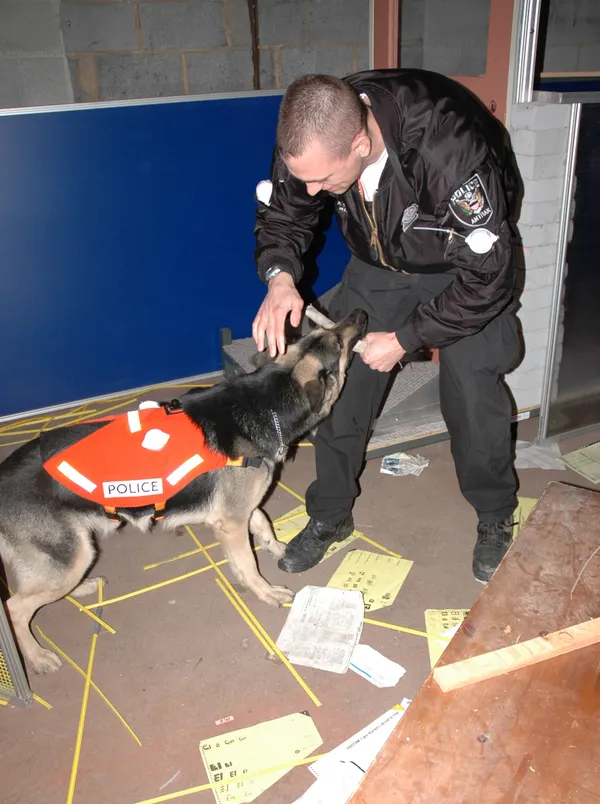
Simulation at MIA highlights sensor-based threat identification without opening vehicles
A Florida International University (FIU) team conducted a live demonstration at Miami International Airport (MIA) on Wednesday, February 18, 2026, showing how a robotic platform can help identify a suspected explosive during a controlled simulation. The exercise took place outside Concourse J and involved a trained explosives-detection dog working alongside a quadruped robot.
In the scenario, the dog approached a parked sedan and alerted, indicating the presence of an explosive. Following that alert, the robot moved in and performed a chemical-identification step without opening the trunk, sending a result message to deputies with the Miami-Dade Sheriff’s Office. The system identified ammonium nitrate, a chemical commonly used in industrial blasting agents, including in mining.
How the system worked and what it is designed to add
The robot used in the simulation was a Boston Dynamics quadruped outfitted with a laser-based chemical sensing capability described as able to identify specific chemicals. FIU researcher Kenneth G. Furton, who led the demonstration, described the operational logic as a complementary pairing: the dog provides rapid screening and a behavioral alert, while the instrumented robot is intended to add analytic detail about what substance is present.
The approach showcased at MIA aligns with a broader research area often described as machine olfaction—sensor systems sometimes referred to as “electronic noses.” These systems are designed to detect and classify chemical signatures and are being explored for multiple applications that depend on rapid identification of trace materials.
Operational context: airports, public safety, and layered detection
Airport security relies on layered measures that include screening, patrols, and response procedures. Demonstrations like the one conducted at MIA are aimed at showing how emerging tools might integrate with existing teams rather than replace them, particularly in environments where minimizing disruption and improving standoff assessment can be valuable.
Miami-Dade’s law-enforcement agency has been transitioning from the Miami-Dade Police Department identity to the Miami-Dade Sheriff’s Office following the swearing-in of Sheriff Rosie Cordero-Stutz on January 7, 2025. Deputies from the sheriff’s office participated in the February 18, 2026 simulation and received the robot’s chemical-identification message during the test scenario.
Key verified elements from the demonstration
- Location and date: outside Concourse J at Miami International Airport on February 18, 2026.
- Scenario flow: explosives-detection dog alert followed by robotic chemical identification at the vehicle trunk, without opening it.
- Result reported in the simulation: ammonium nitrate was identified and communicated to deputies.
- Agencies and participants: FIU researchers and Miami-Dade Sheriff’s Office deputies.
The demonstration presented a workflow in which canine detection initiates a response and sensors are used to refine the characterization of a suspected threat.