Florida Legislature approves land-use bill cited in Fontainebleau water-park dispute, shifting local review powers
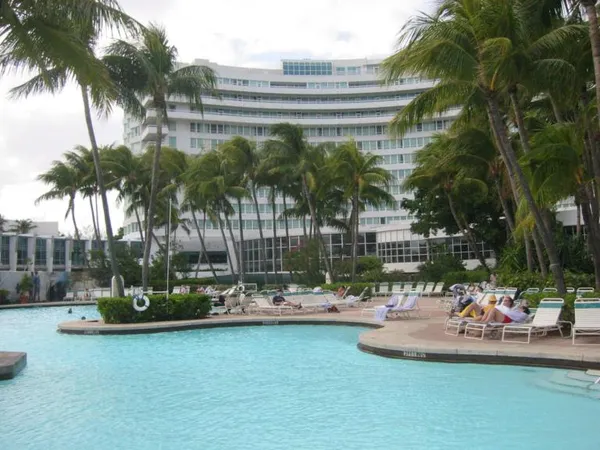
State bill advances as Miami Beach debates Fontainebleau redevelopment plans
Florida lawmakers on March 13, 2026 approved wide-ranging land-use legislation that supporters describe as streamlining development approvals, while opponents in Miami Beach argue it could weaken local review in disputes such as the proposed Fontainebleau Miami Beach water-park project.
The measure, House Bill 399, cleared both chambers the same day after the Senate substituted it for Senate Bill 208 and approved amendments before sending the legislation back to the House for concurrence. The House then concurred in the Senate changes and ordered the bill enrolled. The bill’s effective date is “upon becoming a law,” while several specific provisions take effect on January 1, 2027.
What the legislation does
The enrolled version of HB 399 includes multiple sections affecting how counties and municipalities set fees, process certain applications and define the boundaries of local discretion. Among the most closely watched provisions in the Miami Beach debate is a new statute creating statewide rules for “large destination resorts.”
Creates a statewide framework for “large destination resorts.” A “large destination resort” is defined as a public lodging establishment on at least five contiguous acres under common control, with at least 500 guest rooms, and an average occupancy of at least 70% over the past three years.
Requires administrative approval of certain resort requests. Local governments must administratively approve applications for “minor special exceptions or variances” submitted by qualifying large destination resorts for maintenance, modification, or refurbishment of an existing structure or site that is not a contributing structure listed in the National Register of Historic Places, if the changes are consistent with existing permitted or accessory uses in the applicable comprehensive plan land-use category or zoning district.
Restricts how local governments calculate some development application fees. Beginning January 1, 2027, application fees for development permits or development orders must reasonably relate to direct and reasonable indirect costs tied to reviewing and processing the application, must be published on a fee schedule, and cannot be based on a percentage of construction costs, site costs, or overall project valuation.
Why the Fontainebleau dispute is linked to a statewide bill
In Miami Beach, the Fontainebleau’s proposed pool-deck and amenity redevelopment—including waterslide-style attractions—has become a focal point for a broader conflict over home-rule authority, historic context, and how much discretion local boards retain over high-profile projects. City officials and residents opposing the water-park concept have argued that state legislation aimed at uniformity can, in practice, narrow local decision-making tools and accelerate approvals when projects qualify under state definitions.
The new law sets a statewide definition for large destination resorts and requires administrative approvals for certain minor exceptions or variances that meet statutory conditions.
What happens next
With HB 399 now passed by the Legislature and ordered enrolled, the next step is final presentment for executive action. Separately, the Fontainebleau proposal remains subject to the City of Miami Beach’s ongoing local review processes and any applicable state-law constraints, with the practical impact of HB 399 likely to hinge on how “minor” variances are interpreted, whether requested changes are deemed consistent with existing permitted or accessory uses, and whether any project elements implicate protected historic designations.