Miami Gardens House Fire Sends Heavy Smoke Across Neighborhood as Firefighters Contain Flames and Hot Spots
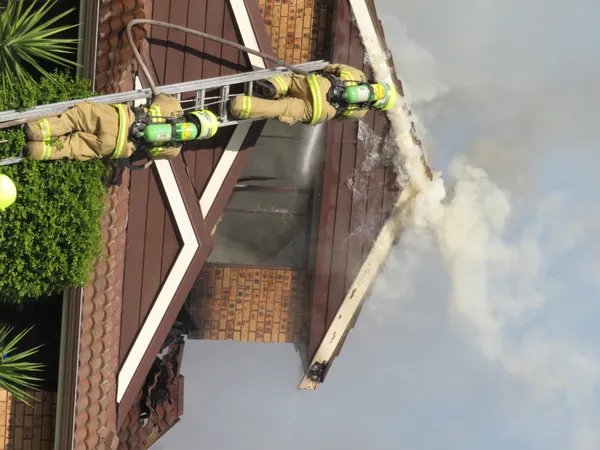
Large residential blaze prompts rapid response in northwest Miami-Dade
A house fire in Miami Gardens produced thick, dark smoke that was visible across surrounding neighborhoods as firefighters worked to bring the flames under control. Emergency crews arrived to find heavy smoke conditions and active fire involvement, then shifted into containment operations aimed at stopping the blaze from spreading to adjacent structures.
Fire officials focused on suppressing the main body of fire while addressing lingering hot spots—areas where residual heat can reignite hidden fire in attics, wall cavities, or roof spaces. Operations typically include securing utilities, checking for extension into nearby rooms and adjacent properties, and ventilating smoke while protecting neighboring homes from radiant heat and embers.
What responders prioritize at a smoke-heavy house fire
Life safety: confirming evacuations, searching for anyone trapped, and treating smoke exposure when needed.
Exposure protection: positioning hoses to prevent fire spread to nearby homes, vehicles, and outbuildings.
Stabilization and overhaul: pulling ceiling or wall materials to locate hidden flames and reducing the risk of rekindle.
Scene control: restricting access due to collapse hazards, downed power lines, or compromised roofs.
Heavy smoke visible from a distance is not, by itself, a measure of how quickly a fire will be extinguished; it often reflects ventilation patterns, building materials, and how the fire is being attacked.
Health and safety concerns extend beyond the property line
House fires can generate smoke containing fine particles and irritant gases that drift with shifting winds. Residents nearby are often advised to reduce exposure by staying indoors, keeping windows and doors closed, and running air conditioning on recirculation when smoke conditions are present. People with asthma, chronic lung disease, heart conditions, older adults, and young children are generally more vulnerable to poor air quality during fire incidents.
Investigation and recovery
Once the fire is extinguished and hot spots are eliminated, investigators typically examine the area of origin and potential ignition sources. Determining the cause can take additional time, particularly when structural damage is significant or when multiple potential ignition points must be ruled out. Residents impacted by a house fire may face temporary displacement and extensive repairs due to both fire damage and water used in suppression.
Fire crews remained focused on full suppression and ensuring the property was safe from flare-ups before clearing the scene.