Miami’s Cuban exile leaders draft transition plans as Trump hints at a “friendly takeover” of Cuba
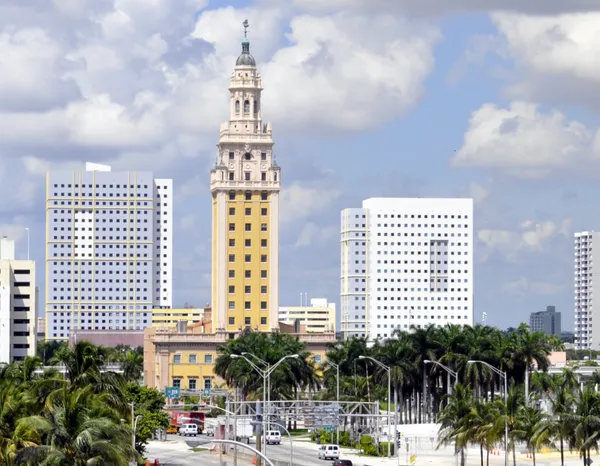
Exile organizations prepare for a potential opening while Washington signals pressure and negotiation
Miami’s Cuban exile community is mobilizing around the prospect of a political transition in Cuba after President Donald Trump publicly raised the possibility of a U.S.-backed path to regime change that he described as a “friendly takeover.” The remarks, delivered as he hosted a hemispheric meeting in the Miami area on March 7, 2026, have accelerated organizing among exile groups that have long argued they can help rebuild state institutions and the economy if a post-communist transition begins.
In recent weeks, exile leaders and civic figures have been meeting publicly in Miami-Dade County to present transition frameworks and to demonstrate unity behind a set of demands that include political freedoms, the release of prisoners, and credible steps toward competitive elections. Rallies in South Florida have combined calls for democratic change on the island with expectations that Washington could increase diplomatic, legal, and economic pressure on Havana.
A “Liberation Agreement” sets out a roadmap
On March 2, 2026, opposition and exile organizations gathered in Miami to sign a document described by its promoters as a “Liberation Agreement” or “Liberation Accord.” The effort was led by figures associated with the Assembly of the Cuban Resistance and the Pasos de Cambio coalition, and presented as an attempt to align multiple organizations around a sequence for a transition, stabilization, and eventual elections.
While the document is political in nature rather than legally binding, its publication reflects a strategic shift: moving from broad denunciations of the Cuban government toward a more structured outline for what exile leaders say would be needed immediately after a change of power. Organizers have emphasized that any transition would require coordination with domestic actors on the island and rapid international engagement to prevent institutional collapse and humanitarian deterioration.
- Proposed steps include forming a transitional authority, restoring civic and political rights, and preparing an electoral process.
- Public messaging has repeatedly highlighted the release of political prisoners as an early benchmark.
- Economic recovery is framed as requiring emergency support and medium-term investment plans, including reconstruction of basic services.
U.S. policy signals: investigation, diplomacy, and congressional constraints
Alongside the political organizing in Miami, developments in Washington point to multiple tracks of action. Federal law enforcement officials in Miami have considered criminal investigations involving Cuban government figures, according to reporting on internal deliberations. At the same time, Cuban President Miguel Díaz-Canel has publicly confirmed that talks have taken place with the U.S. government, a notable acknowledgment amid Cuba’s worsening economic and energy pressures.
Trump’s public comments about “takeover” language have also generated pushback on Capitol Hill. On March 13, 2026, Senate Democrats filed a war powers resolution intended to prevent any U.S. attack on Cuba without congressional authorization, underscoring that even if the administration pursues coercive options, domestic legal and political constraints remain central.
Exile leaders in Miami describe their goal as preparing for a transition that is immediate, orderly, and capable of delivering basic governance while political reforms take hold.
What remains uncertain
Key questions remain unresolved: whether any U.S.–Cuba talks would prioritize political change or focus on narrower arrangements; whether the Cuban state would accept an “off-ramp” scenario for current leaders; and how a transition could be secured without triggering instability. For Miami’s Cuban exile networks, the current moment is being treated as a test of readiness: aligning political objectives, presenting a reconstruction plan, and waiting to see what concrete steps the Trump administration takes next.